
Non-Profit Housing Won’t Save Us
Jason Thiel
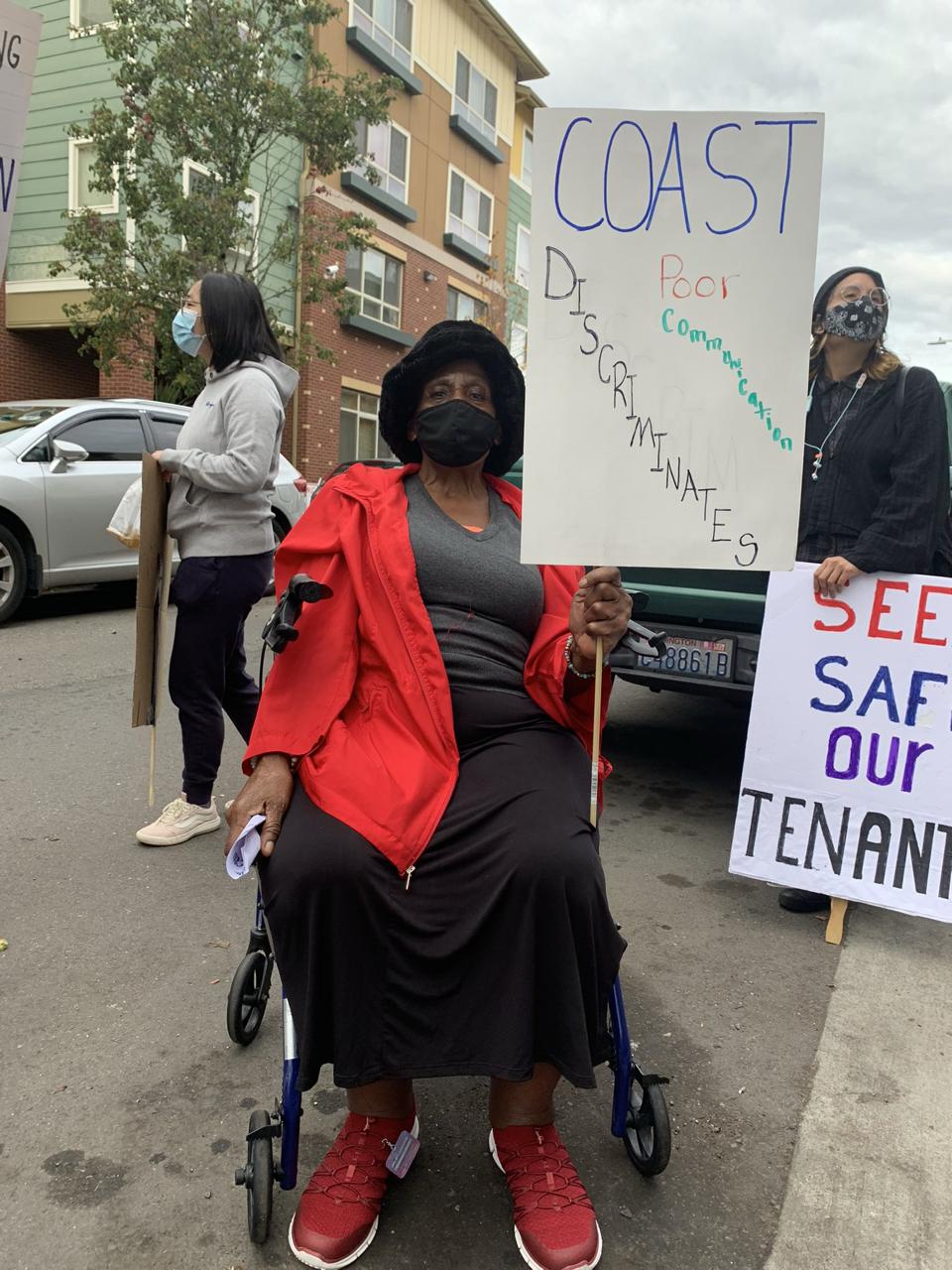
In 2021, tenants at Rainier Court in South Seattle were facing a range of issues with mold, cockroaches, broken appliances, security issues, and other slum-like conditions. In just the month of October, tenants filed 39 housing-code complaints. Rainier Court is a low-income apartment complex owned by SouthEast Effective Development (SEED). A majority of their tenants were living on fixed incomes, and despite the deplorable living conditions, SEED tried to raise rent on their tenants. The tenants got organized with Kshama Sawant’s socialist City Council office and forced SEED to rescind the rent increases.
SEED is a “non-profit” affordable housing provider — one of many in the United States. Of the 5 million affordable housing units managed through HUD programs, about a third are developed and managed by non-profits, or about 1.5 million units. We desperately need affordable housing. But not all affordable housing is created equal.
Although non-profit developers don’t report a profit, they are still businesses with everything that entails. Their executives are paid lavish salaries while tenants suffer. Some non-profit housing developer CEOs make nearly $600k a year. AHEPA Affordable Housing Management, which manages over 90 senior living apartment complexes across 21 states, pays its CEO Steve Beck $598,000 a year. Seattle’s largest affordable housing non-profit, Bellwether Housing, paid its CEO $365,000 in 2024. Its CFO made $320,000. Community Roots Housing, another Seattle non-profit, pays its CEO $250,000 a year.
Non-profit housing is funded by federal, state, and local government grants. That money isn’t paying to make high-quality affordable housing run by renters and workers. It’s used to build the minimum (and sometimes below-minimum) quality housing that allow these non-profits to continue qualifying for grants, and to sustain a small army of executives and staff who live on the backs of tax dollars and low-income tenants.
Non-profit affordable housing is often not even that affordable. Most of the time, rent is based on a percentage of the area’s median income. For example, in King County, WA, the Area Median Income (AMI) includes wealthier middle-class homeowners in the area. King County’s AMI for homeowners is $156,765, while for renters it’s nearly half that — $82,818. A report from the Affordable Housing Committee found that the median rent for a market-rate studio apartment in King County was $1,646, which was BELOW the AMI-calculated max rent for an affordable housing apartment.
Non-profit housing developers have also been some of the biggest lobbyists against tenant protections. Last year, the Democrats on the Seattle City Council tried to repeal a bunch of renters’ rights that were won through Kshama Sawant’s council office, like a ban on winter and school-year evictions. This attack was supported by the Housing Development Consortium, which is the lobbying arm of the non-profit housing developers in the Seattle area, including Bellwether Housing. The attack was defeated by workers and renters getting organized and fighting back, even forcing the Democrat who introduced the attack — Cathy Moore — to resign. The HDC was so hell-bent on repealing eviction protections they tried to go through other Councilmembers after that and failed.
So what is the solution? We need a massive expansion of public housing run by workers and renters, and non-profit housing should be taken into public ownership. Housing should not be run by wealthy non-profit executives any more than it should be run by billionaire corporate landlords. Tenants should have control over their conditions.
The Amazon Tax, which was won by workers and socialists in 2020 during the George Floyd movement alongside Kshama’s council office, raises hundreds of millions of dollars a year earmarked for affordable housing. In recent years it has been raided by Democrats to fill their budget deficits, but even before that, it was never set to fund public housing. The original Amazon Tax ballot initiative would have funded public housing, but the Democrats watered it down and diverted it into non-profits.
Winning the Amazon Tax was a victory, but Kshama Sawant and the Amazon Tax leaders should have warned forcefully about the massive weaknesses in the final bill — chief among them the abandonment of truly public housing. Instead, they mostly cheerled the final bill. This was a betrayal. Non-profit housing and public housing are not equivalents. Non-profit housing does not threaten anything about the capitalist housing system.
Public housing is not a total solution under capitalism. But it is a threat to the profits of corporate landlords and the control of the real estate industry. New York City won a massive expansion in public housing in the 1930s due to waves of rent strikes, a militant labor movement, and socialist leadership. That’s why the capitalists have spent the better part of the last century undermining public housing through underfunding and privatization.
We have to go further, though. Workers in Russia took power in 1917. By 1922, housing was totally nationalized and run by workers. The average rent was 3% of a worker’s income. Compare that to today where over half of all renters pay more than 30% of their income on rent. This is what’s possible in a socialist society, where workers run the world.
Right now public housing is a minority of the already small amount of affordable housing in this country. We need to build a movement to fight for expanding public social housing funded by taxing the rich, alongside national rent control. The Democrats and Republicans will never do this. Just like the fight for the Amazon Tax, it will take independent socialists, workers, and renters fighting together against the Democrats, Republicans, and big landlords. However, this time we need to turn that fight into a permanent organization and a new party.